
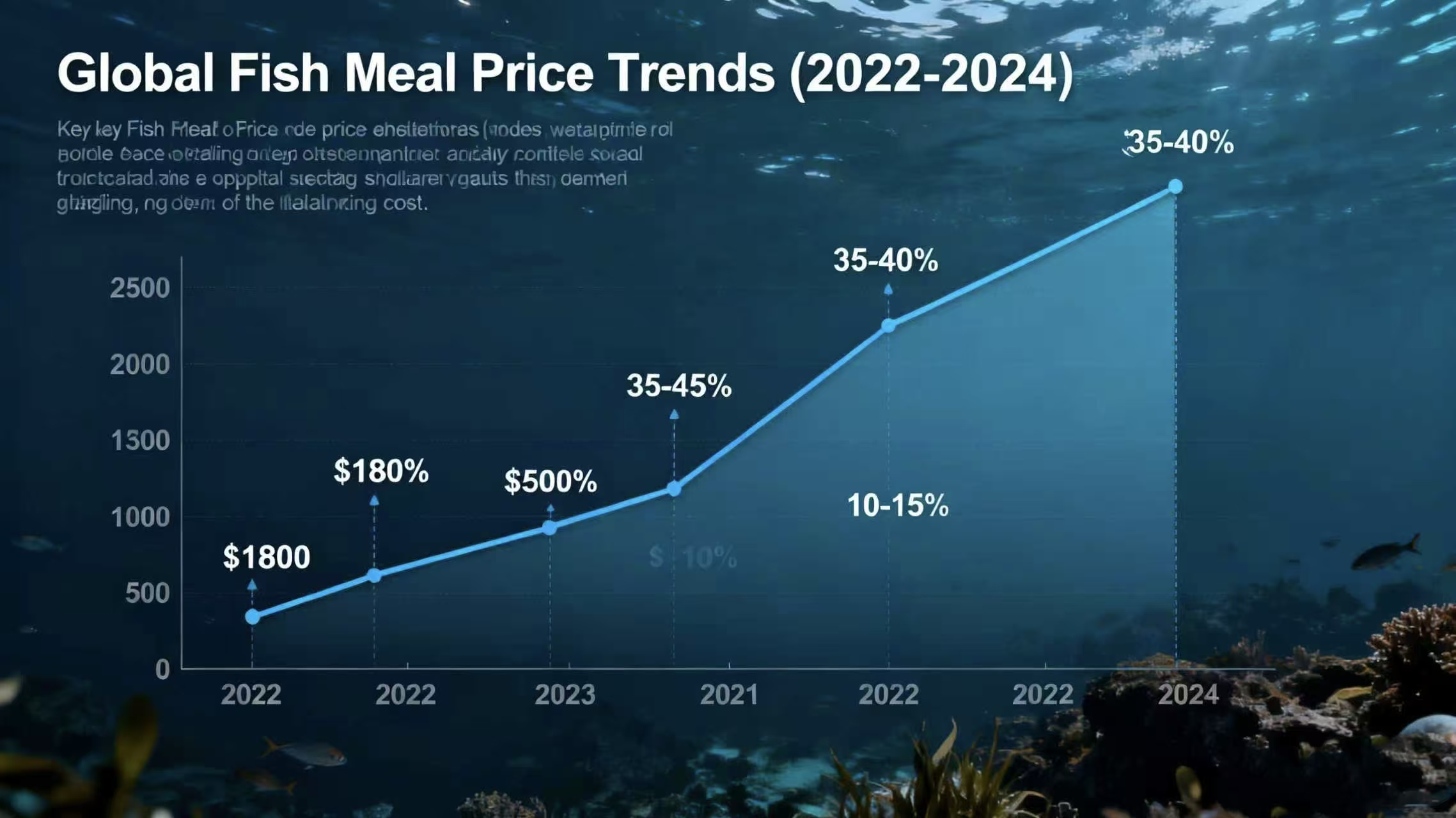
As global fish meal prices soar by 35-40% year-over-year (driven by overfishing, supply chain disruptions, and rising marine logistics costs), poultry producers worldwide face unprecedented cost pressure. A growing body of trials and commercial applications confirms that black soldier fly larvae meal (BSFL meal) has become a reliable, high-performance alternative—delivering significant cost savings for both layer and broiler farms while maintaining or improving production quality. This solution directly addresses the fish meal price crisis, offering a stable and profitable path for the global poultry industry.
1. The Fish Meal Price Crisis: A Pressing Challenge for Poultry Producers
Fish meal has long been a core protein source in poultry feed, but its volatility has become unsustainable:
Price instability: Since 2022, global fish meal prices have surged from $1,800/ton to over $2,500/ton, with short-term fluctuations of 10-15% due to weather events or trade policies.
Supply risks: Overfishing has reduced global fish stocks, leading to stricter catch quotas (e.g., EU Common Fisheries Policy) that further limit fish meal supply.
Cost burden: For mid-sized layer and broiler farms, fish meal accounts for 25-30% of total feed costs—price hikes translate to a 8-12% increase in overall breeding expenses.
This crisis has forced producers to seek alternatives that balance cost, performance, and reliability—with BSFL meal emerging as the standout solution.
2. Proven Performance: BSFL Meal Delivers Results for Layers & Broilers
For layers:
Substitution potential: Replaces 20-30% of fish meal without compromising egg production—trials on 1,500 Hy-Line Brown layers showed a 12% reduction in feed costs while maintaining a 92%+ laying rate.
Quality retention: Eggshell strength (3.2kg/cm²) and yolk color (Roche scale 12) met premium market standards, with no decline in protein or amino acid content.
For broilers:
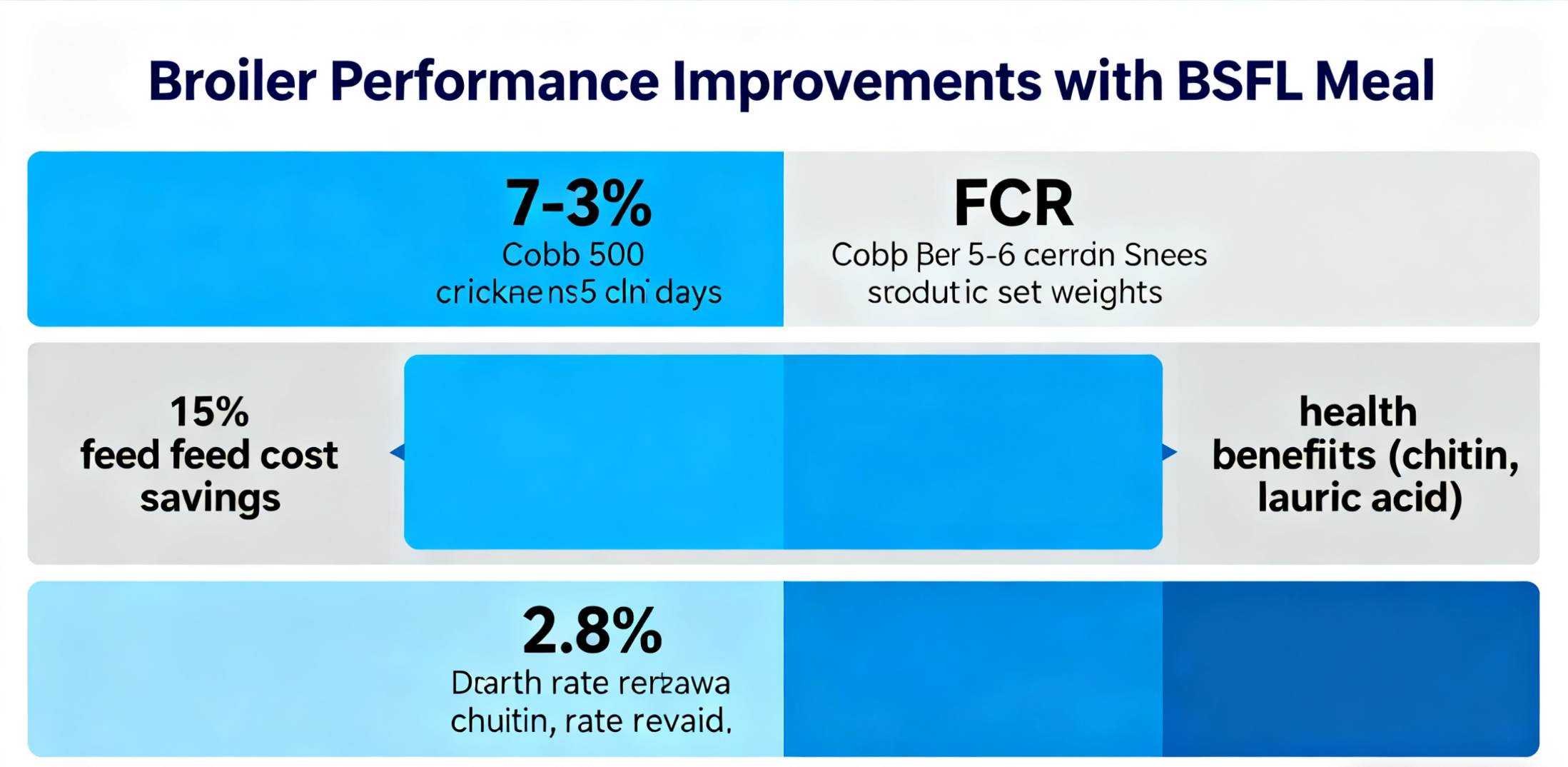
Efficiency boost: Replacing 15-25% of fish meal (and 10-20% of soybean meal) reduces feed conversion ratio (FCR) by 7-9%—Cobb 500 broilers reached market weight 5-6 days earlier with 15% lower feed costs.
Health benefits: Rich in chitin and lauric acid, BSFL meal reduced broiler mortality by 2.8% compared to fish meal-based diets, lowering veterinary expenses.
These results are backed by industry data: A 2024 survey of 120 global poultry farms using BSFL meal found an average cost savings of $180-220 per ton of feed, with 93% reporting no negative impact on production performance.
3. Dual Advantages: Cost Savings & Stable Supply
Predictable low costs: Produced from organic waste (food by-products, agricultural residues), BSFL meal costs $1,200-1,500/ton—30-40% lower than current fish meal prices. Its raw material supply is local and abundant, avoiding global market volatility.
High cost-performance ratio: With crude protein content (43-48%) and essential amino acid profiles (lysine 2.7%, methionine 0.7%) comparable to fish meal, BSFL meal requires no extra nutrient supplements—further reducing formulation costs.
Long-term stability: Unlike fish meal, BSFL meal production is not dependent on marine resources or global trade—producers lock in stable pricing through local supply chains, shielding against future price hikes.
4. Compliance & Sustainability: A Future-Proof Choice
Global compliance: Approved by the U.S. FDA, EU Regulation (EC) No 853/2004, and FAO standards for use in poultry feed, ensuring market access to high-value regions.
Eco-friendly production: BSFL meal converts 5-6 tons of organic waste into 1 ton of high-protein feed, reducing landfill emissions by 60% compared to fish meal production. Its carbon footprint is 75% lower than fish meal, supporting net-zero goals.
Conclusion
Contact Us
We’d love to hear from you! Whether you’re looking for sustainable BSF protein solutions,
partnership opportunities, or technical information — our team is here to help.
📧 Email: mailto:[email protected]/http://[email protected]
WhatsApp:https://api.whatsapp.com/send/?phone=15322415751
🌐 Website: www.bsfchina.com